
Where Collaborative Science Meets Computational Precision
We operate at the nexus of focused research and open collaboration. We believe the most significant biological discoveries are accelerated not in isolation, but through synergistic partnerships that combine diverse expertise. This section highlights our core research initiatives and is an open invitation to fellow innovators.
Our Collaborative Philosophy
- We seek partnerships that are true intellectual alliances.
- Our ideal collaborators are researchers, labs, and biotech innovators who share a commitment to rigorous science and a vision for translating complex data into clear biological understanding.
- We contribute deep computational proficiency, strategic analysis, and a passion for building the tools that make discovery faster and more insightful.

Invitation for Collaboration
Are you a PI with a compelling hypothesis but limited computational bandwidth? A biotech team needing to extract maximum insight from a novel dataset? Let’s combine our strengths.
We are particularly interested in co-developing projects in:
- Spatial & Single-Cell Omics: Exploring tissue architecture and cellular heterogeneity.
- Multi-Omics Integration: Unifying disparate data layers for systems-biology insights.
- AI-Driven Discovery: Applying machine learning to novel problems in target identification or biomarker discovery.
- Pipeline Innovation: Building next-generation, reproducible workflows for emerging data types

Research & Publications
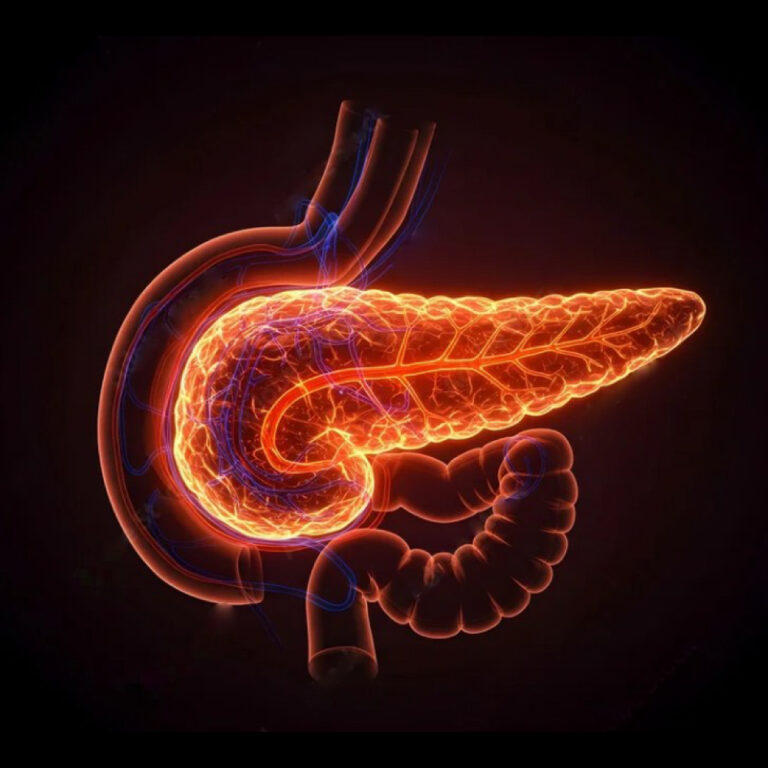


T-Cell Exhaustion and Cancer Biomarkers in Pancreatic Ductal Adenocarcinoma
Pancreatic ductal adenocarcinoma (PDAC) is an aggressive malignancy with poor prognosis and limited response to conventional therapies. The tumor immune microenvironment (TIME), particularly T-cell exhaustion, plays a critical role in PDAC progression and immune evasion by impairing effective anti-tumor immunity.
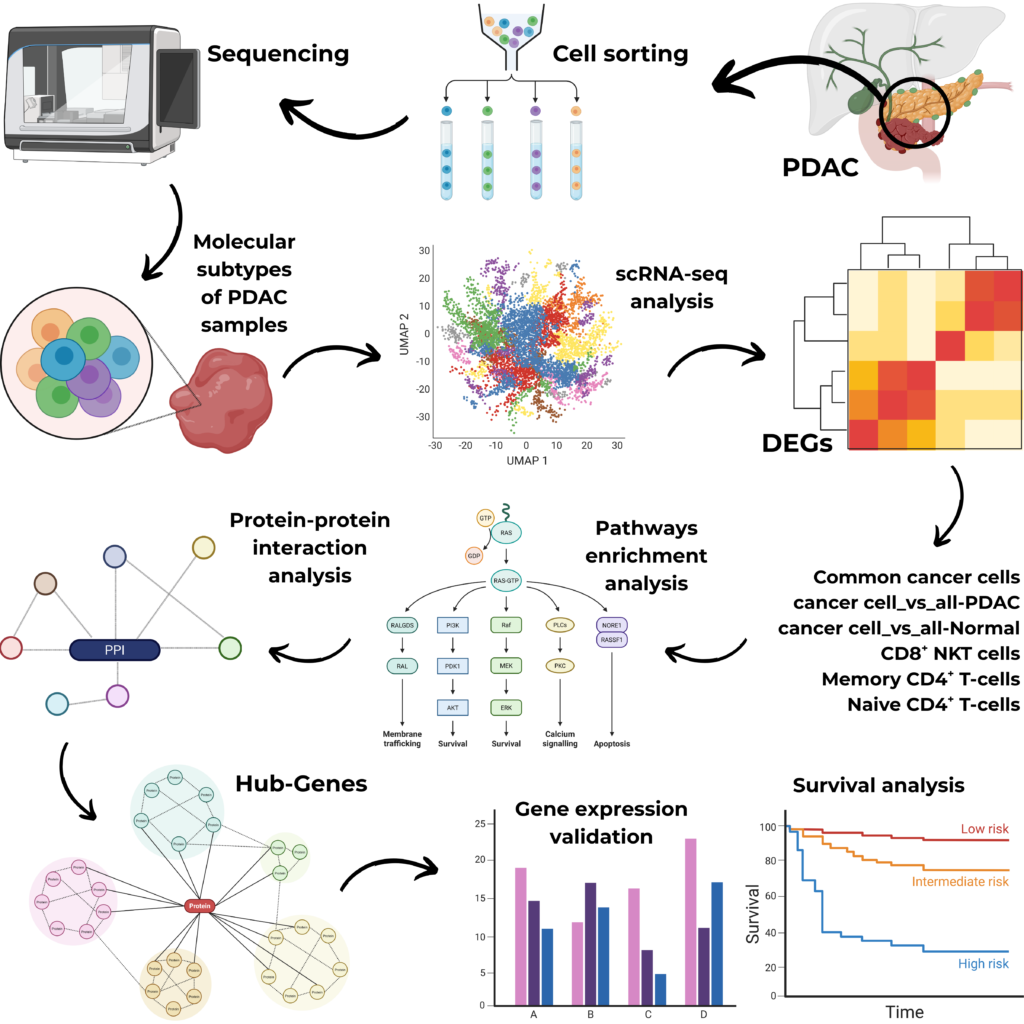
This study employed single-cell RNA sequencing (scRNA-seq) analysis of a publicly available human PDAC dataset, with cells isolated from the primary tumor and adjacent normal tissues, identifying upregulated genes of T-cells and cancer cells in two groups (“cancer cells_vs_all-PDAC” and “cancer-PDAC_vs_all-normal”). Common and unique markers of cancer cells from both groups were identified. The Reactome pathways of cancer and T-cells were selected, while the genes implicated in those pathways were used to perform PPI analysis, revealing the hub genes of cancer and T-cells. The gene expression validation of cancer and T-cells hub-genes was performed using GEPIA2 and TISCH2, while the overall survival analysis of cancer cells hub-genes was performed using GEPIA2.
Conclusively, this study unraveled 16 novel markers of cancer and T-cells, providing the groundwork for future research into the immune landscape of PDAC, particularly T-cell exhaustion. However, further clinical studies are needed to validate these novel markers as potential therapeutic targets in PDAC patients.
Immune Cells Dynamics in Primary and Metastatic Colorectal Cancer
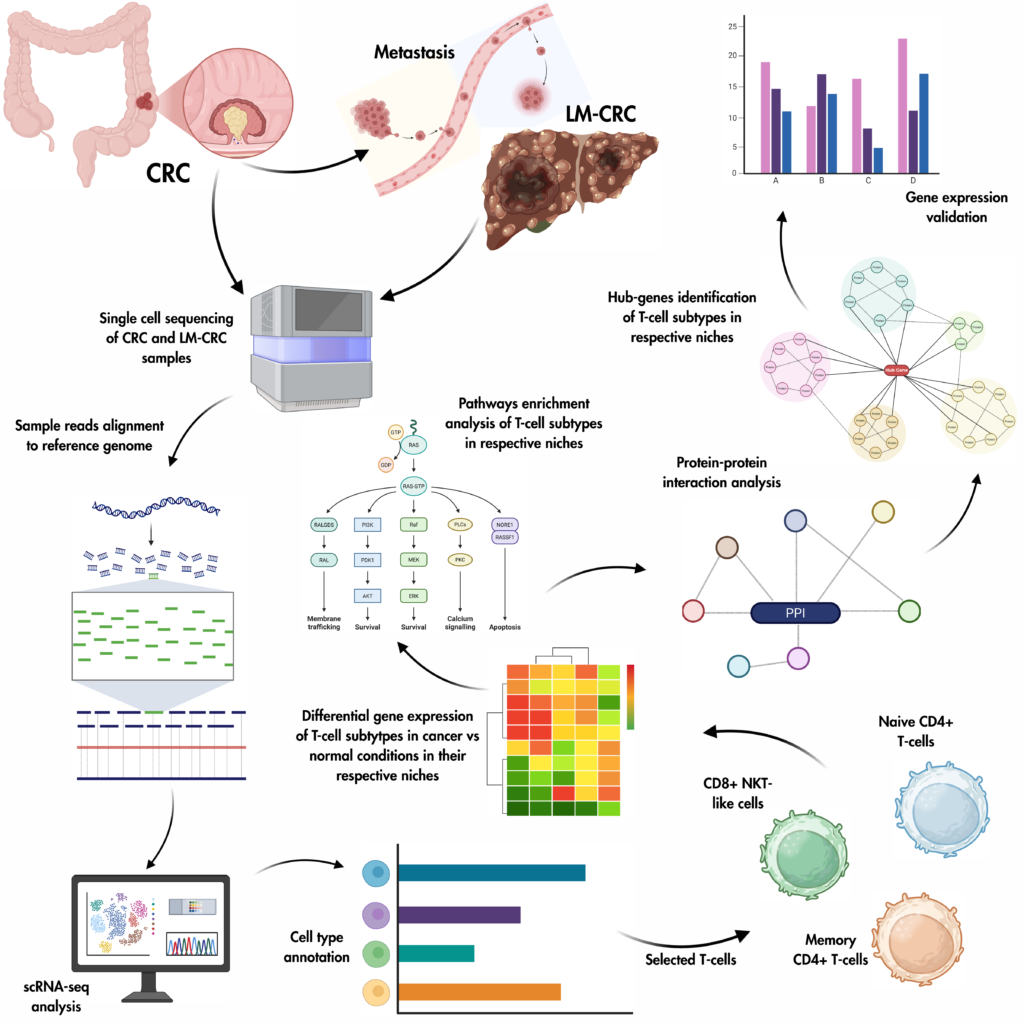
Colorectal cancer (CRC), arising in the colon or rectum, is the second leading cause of cancer-related deaths and frequently metastasizes to the liver. The tumor immune microenvironment (TIME) in both primary CRC and liver metastases (LM-CRC) is immunosuppressive, contributing to T-cell dysfunction and impaired anti-tumor immunity.
In this study, we employed computational approaches to identify T-cell–specific biomarkers dysregulated by niche-specific cancer cell signaling. Single-cell RNA sequencing (scRNA-seq) data from primary CRC and LM-CRC patient samples were analyzed to identify differentially expressed genes (DEGs) in T-cells. Unique T-cell DEGs specific to each niche were selected by excluding genes common to both primary and metastatic tumors, followed by pathway enrichment analysis using Reactome. Protein–protein interaction networks of pathway genes were constructed to identify the top hub genes in each niche. Expression of these hub genes was further validated in independent scRNA-seq datasets.
Our analysis revealed novel T-cell hub genes that are dysregulated due to distinct cancer cell signals in primary and metastatic niches. These genes are likely involved in niche-specific T-cell dysfunction and may serve as potential targets for immunotherapeutic interventions. Further studies in larger cohorts and experimental validation are necessary to confirm the therapeutic relevance of these findings.
Divergent Genetic Drivers of Convergent Neurotoxicity in AD, PD, and LBD
Neurodegenerative diseases are among the most common causes of death worldwide and are characterized by the progressive loss of neural networks, leading to impairments in memory, cognition, sensory processing, and motor function. Although recent therapeutic advances have improved patient care, their efficacy is often limited by neuroinflammatory responses that contribute to disease progression and neuronal damage.
To further explore the biological processes involved in these disorders, our research focuses on examining molecular changes within key glial cell populations in the human brain. By investigating patterns of gene activity across different neurodegenerative conditions, the study aims to identify cellular responses that may contribute to disease progression. Particular attention is given to molecular signatures associated with inflammatory signaling and cellular stress, which are increasingly recognized as important factors in neuronal vulnerability.
Through an integrative analysis of molecular and cellular features, this work seeks to characterize both shared and disease-specific biological alterations present in neurodegenerative conditions. Emphasis is placed on understanding how changes within supportive brain cells may influence the broader neural environment and potentially contribute to neuronal dysfunction. Insights gained from this research may help improve our understanding of disease mechanisms and support the development of future therapeutic strategies.
Dopaminergic Regulatory Networks in Parkinson's Disease
Neurodegenerative diseases such as Parkinson’s disease are characterized by the progressive degeneration of specific neuronal populations, leading to impairments in motor control, cognition, and other neurological functions. Multiple biological processes, including disruptions in protein homeostasis, mitochondrial function, inflammatory signaling, and cellular stress responses, have been implicated in disease progression, yet the complex molecular interactions underlying neuronal vulnerability remain incompletely understood.
This project focuses on exploring gene expression changes associated with vulnerable neuronal populations in Parkinson’s disease by integrating insights from existing biological knowledge with transcriptomic data derived from human brain samples. The study aims to identify molecular signatures linked to neuronal dysfunction, with particular attention to pathways involved in cellular stress responses, metabolic regulation, and neuroinflammatory processes that may influence neuronal survival.
Through a comprehensive analysis of molecular patterns and regulatory relationships, this work seeks to highlight both established and potentially novel biological processes involved in Parkinson’s disease and to improve our understanding of how cellular disturbances contribute to neurodegeneration.
Polyphenols Targeting Iron Uptake in Neisseria meningitidis
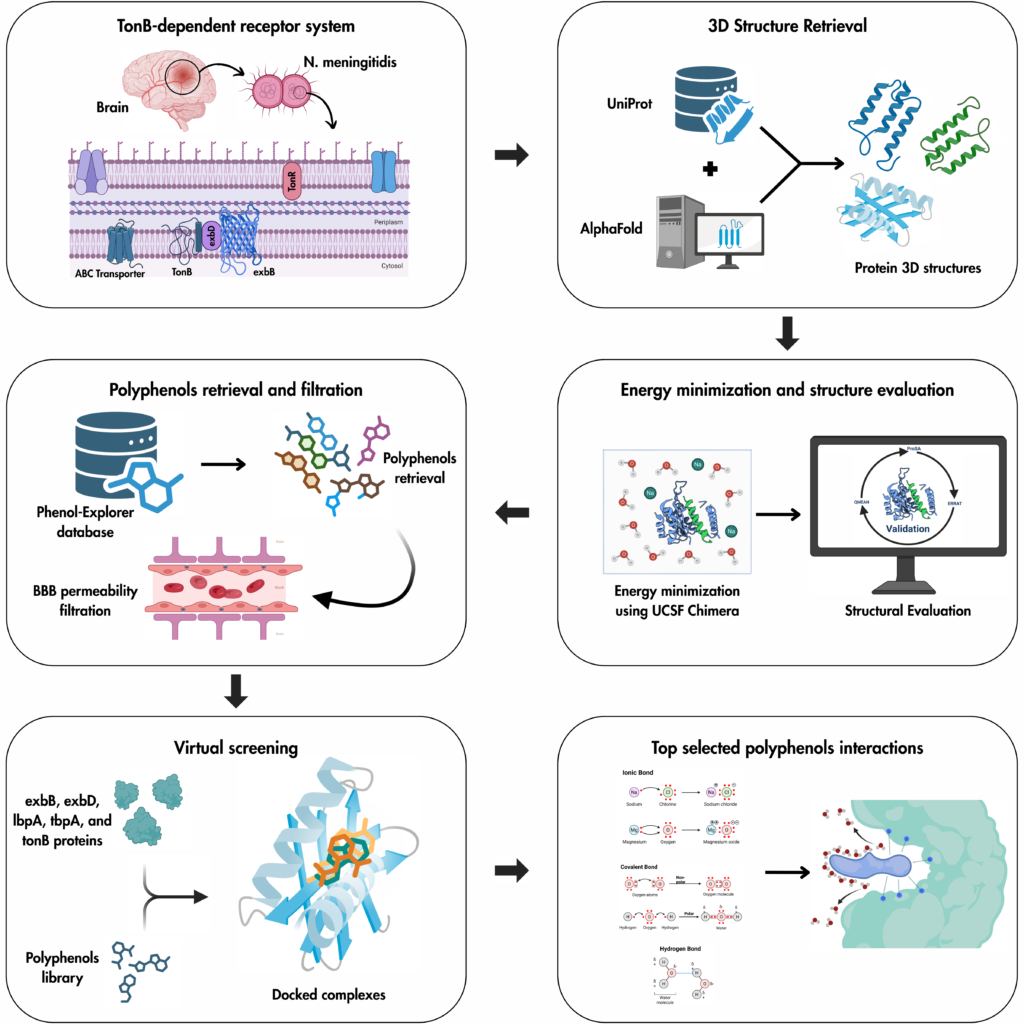
Neisseria meningitidis, a member of the nasopharyngeal microbiota, can invade the host and cause severe diseases such as septicemia and meningitis, which are associated with high morbidity and mortality worldwide. Common symptoms include fever, headaches, musculoskeletal pain, respiratory distress, and reduced appetite. The survival and pathogenicity of this Gram-negative bacterium depend on the TonB-dependent receptor system, which enables active iron transport across the outer membrane using energy from the proton motive force.
In this study, computational approaches, including protein structure retrieval, energy minimization, molecular docking, and 2D interaction analysis, were used to identify inhibitors of key TonB-dependent receptor proteins (tbpA, lbpA, exbB, tonB, and exbD). Among the screened compounds, the polyphenols Episesaminol and Sesaminol showed the strongest binding affinities across all targets and interacted with functional regions such as the receptor plug domain, beta-barrel structures, and C-terminal regions of TonB/TolA proteins, suggesting disruption of essential bacterial processes.
Overall, these findings suggest that polyphenols may serve as promising candidates for developing new antimicrobial agents against N. meningitidis, although further optimization and experimental validation are required to confirm their therapeutic potential.
Interested in exploring a research partnership?
Propose a Collaboration. If you have a project idea, get in touch with a brief overview. Let’s explore how a symbiotic partnership can advance your work.